Carbon Ceramic
Brake Systems
Ready-to-fit CCB disc and pad assemblies. OEM caliper fit, no modifications. For vehicles originally specified with carbon ceramic brakes.
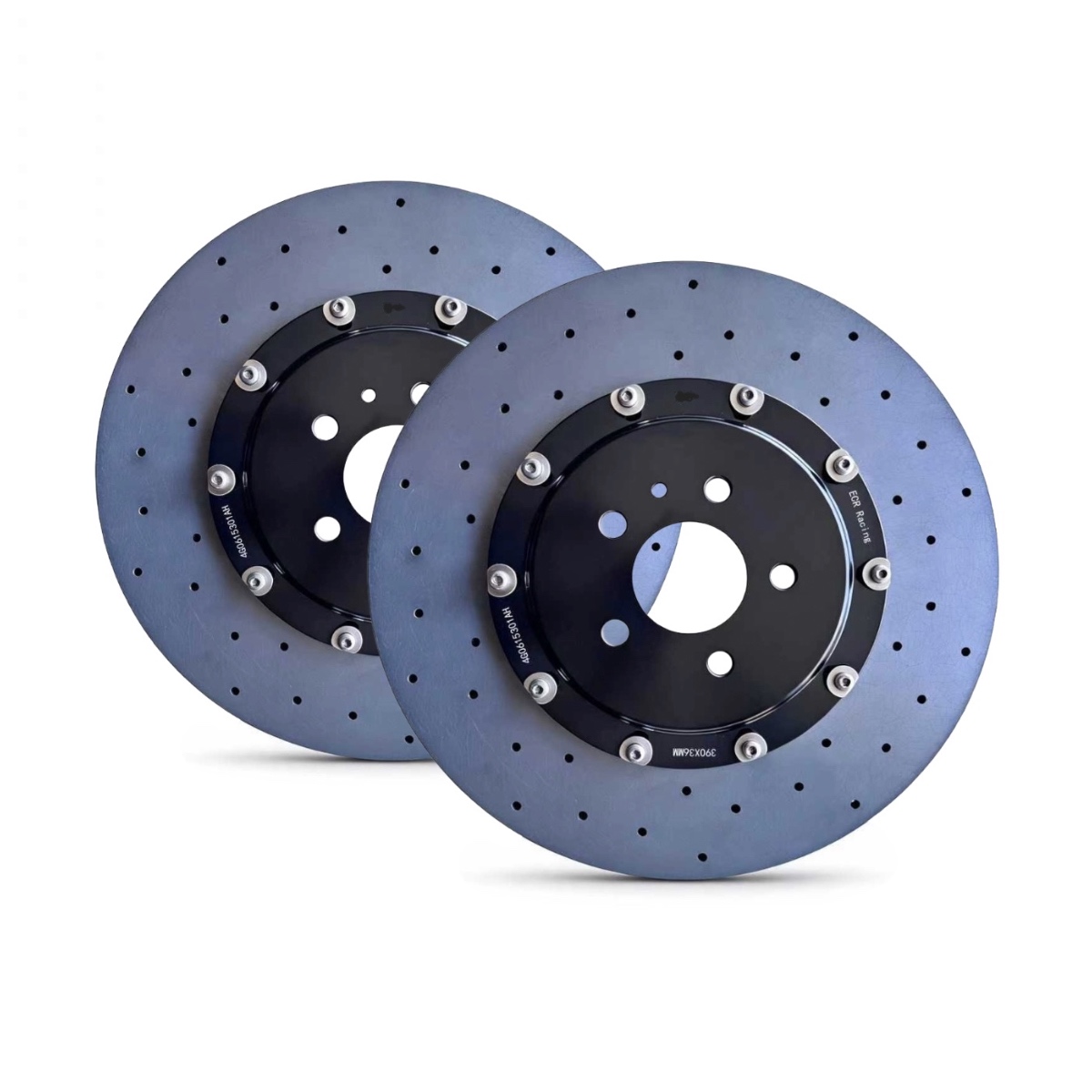
Product Line 03 — ECR Racing
Carbon Ceramic Brake System
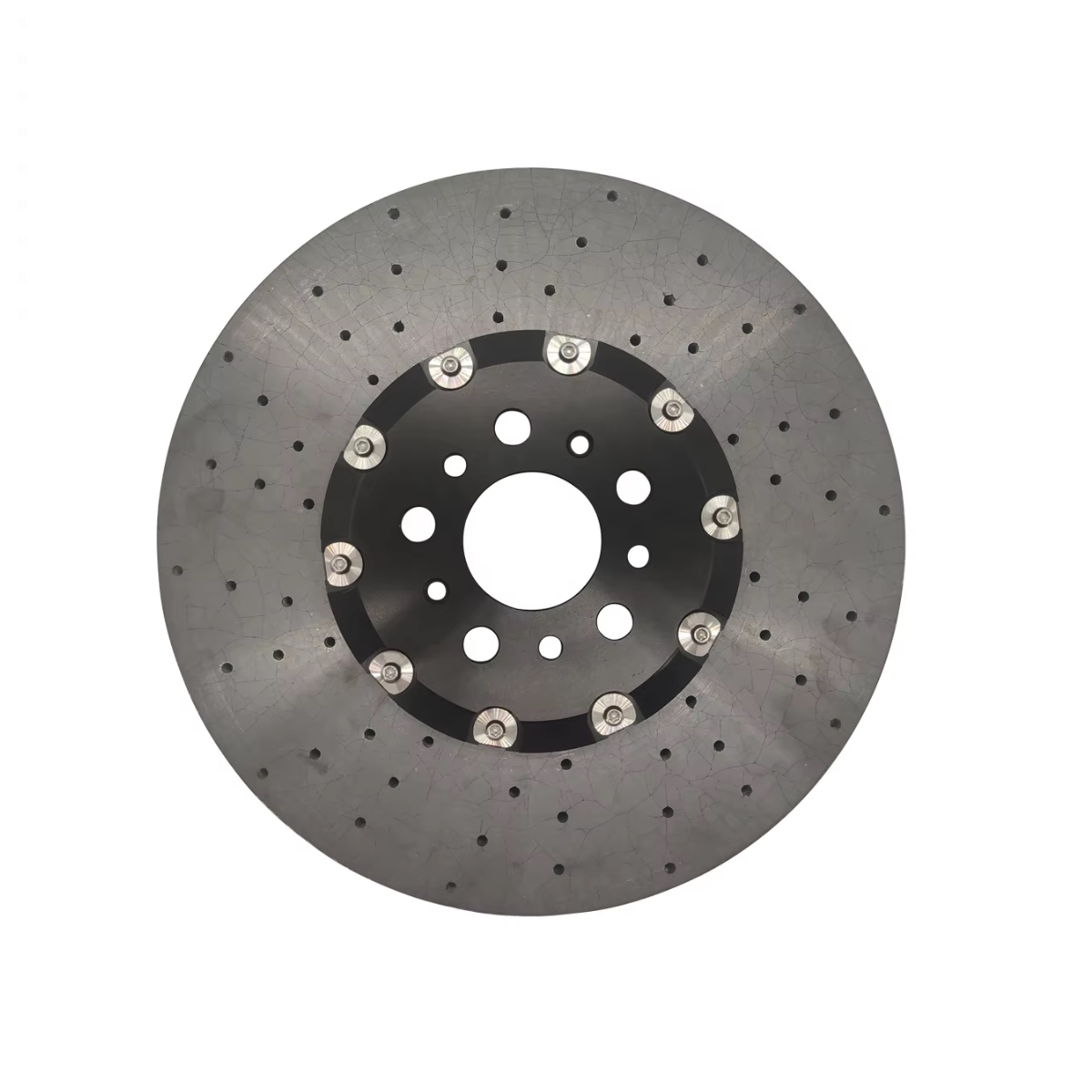
OEM carbon ceramic systems are expensive to replace through main dealers. ECR Racing CCB assemblies are engineered to the same dimensional specification as the original equipment — same disc diameter, same caliper interface, matched pad compound — at a fraction of the main dealer cost.
Why ECR Racing CCB
The same performance.
Not the same price.
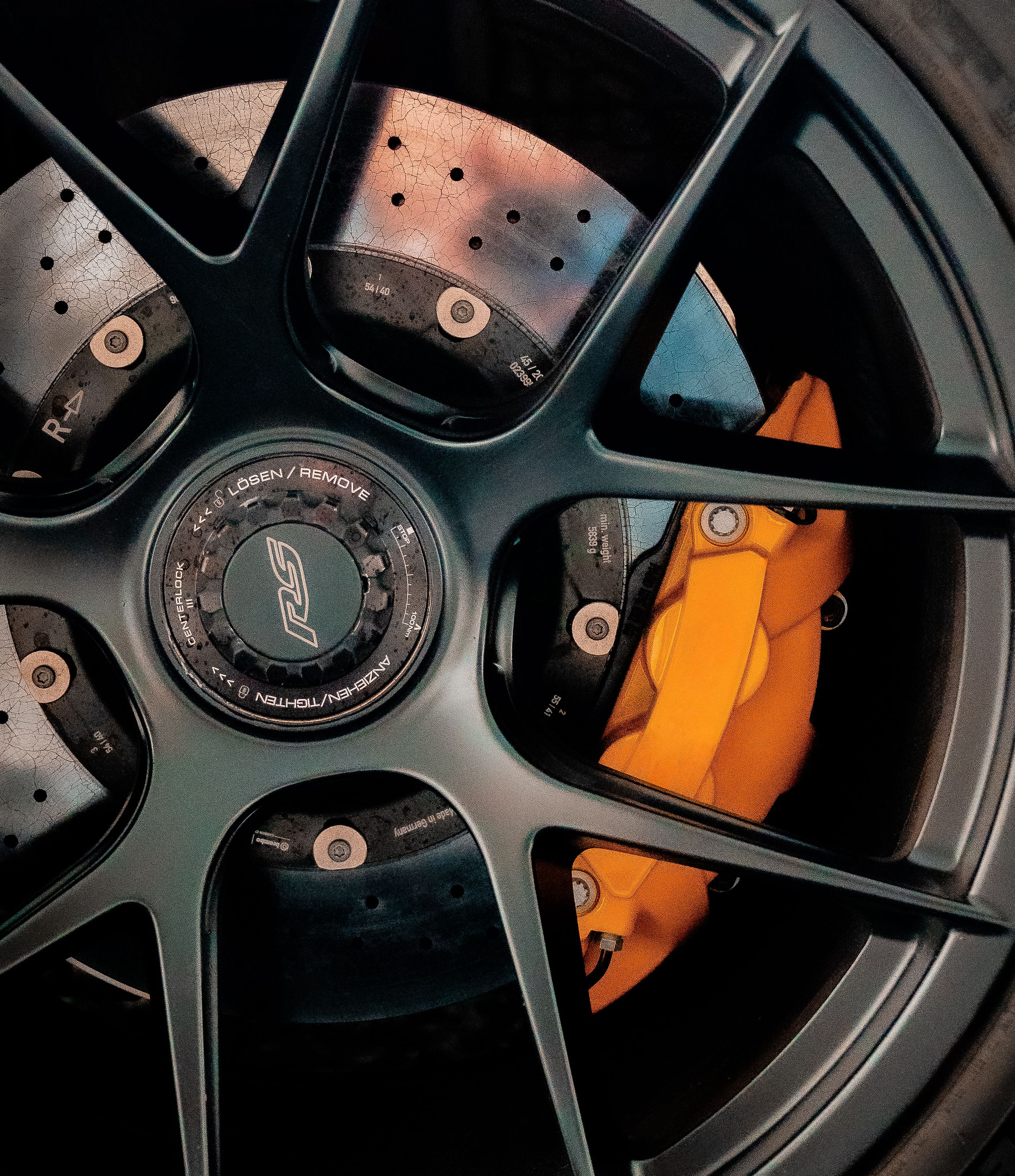
Carbon ceramic brake systems are the best performing disc material available — but OEM replacement costs are prohibitive. ECR Racing CCB systems give you the performance without the main dealer bill.
01 — Weight
Significantly Lighter
Carbon ceramic discs are approximately 50% lighter than equivalent cast iron units. Less unsprung weight means better ride, sharper steering response and reduced suspension loading.
02 — Performance
Fade Resistant
CCB discs maintain consistent performance at extreme temperatures where cast iron systems begin to fade. On track, this means repeatable braking lap after lap without degradation.
03 — Longevity
Long Service Life
Carbon ceramic discs have a significantly longer service life than cast iron on road use. Properly maintained with the correct pad compound, they should outlast the vehicle in normal use.
04 — Cost
Fraction of Main Dealer Price
Main dealer CCB replacement costs are eye-watering. ECR Racing systems are engineered to OEM specification and supplied at a price that makes replacing them a sensible decision, not a reluctant one.
05 — Fitment
Direct OEM Replacement
Every ECR Racing CCB system is dimensioned to match the original equipment exactly. Your existing calipers, brackets and hardware are retained. No modifications, no adapters.
06 — Pads
Matched Compound Included
Every system includes a matched pad compound selected for the specific disc and caliper combination. Using the wrong pad on a CCB disc accelerates wear and reduces performance — we supply the right pad, every time.
Construction Quality
Long-chain vs short-chain fibre.
The difference that doesn't show on a spec sheet.
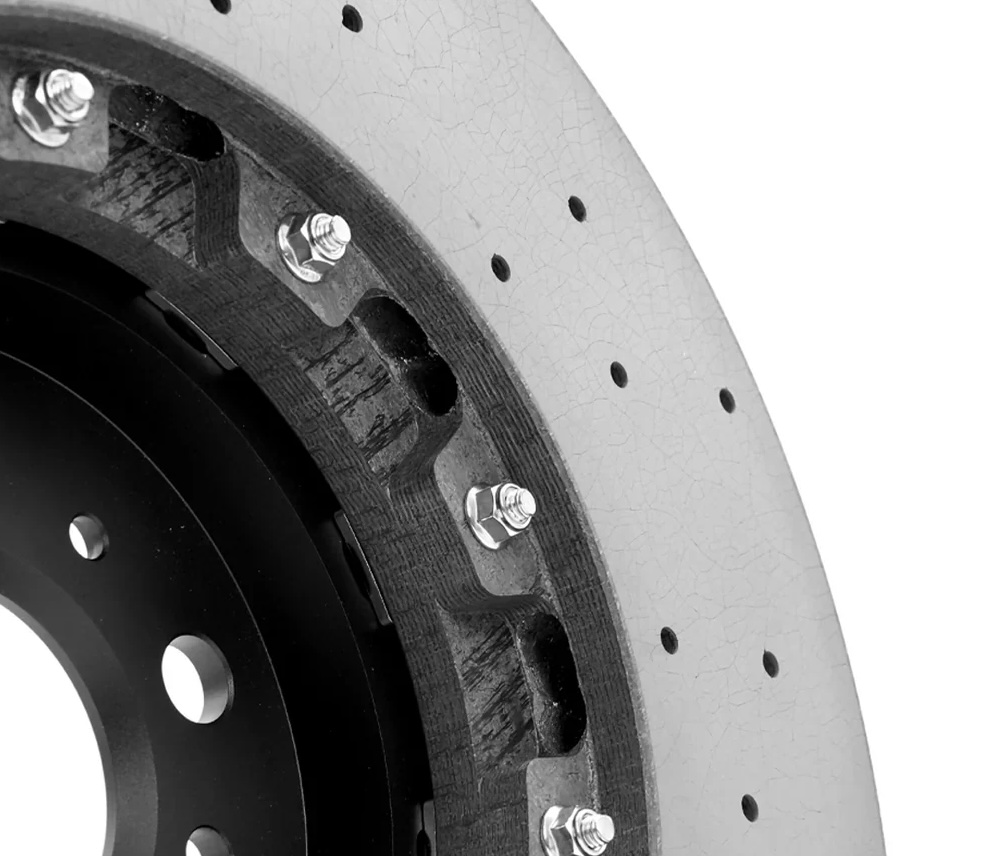
Not all carbon ceramic discs are built the same way. The single biggest factor separating a disc that holds up to years of hard use from one that doesn't isn't the friction surface — it's how the carbon fibre reinforcement is laid down before the ceramic matrix is formed. Every ECR Racing carbon ceramic disc is built with long-chain, continuous fibre — not the short-chain construction used across much of the budget end of the market.
Long-Chain (Continuous) Fibre — The ECR Racing Standard
Continuous fibre tows are woven or laid in engineered orientations before infiltration, similar to how a carbon bonnet or aero component is laminated. Because the fibres run unbroken through the disc, load is carried directly along the fibre length rather than through a matrix of overlapping short strands.
- Higher strength and stiffness along the fibre direction
- Better resistance to crack propagation — a crack has to break through continuous strands rather than travel between fibre ends
- More consistent thermal conductivity across the disc face
- More expensive and slower to manufacture — orientation and layup are done by hand or precision automated tooling
- The construction method used in F1, LMP, and other top-tier motorsport discs — and the standard we build every ECR Racing carbon ceramic disc to
Short-Chain (Chopped) Fibre — The Budget Alternative
Chopped fibre uses short, randomly-oriented strands mixed into a preform, then infiltrated in the same way. There's no directional layup — the fibres are distributed more like chopped strand mat in a fibreglass panel than a woven structure. It's a faster, cheaper route to a carbon ceramic disc, and it's the construction behind most of the budget carbon ceramic discs on the market.
- Lower peak strength and, critically, lower resistance to crack propagation — once a crack starts, it travels more easily between the ends of short, disconnected fibres
- Reduced fatigue life under repeated heavy braking and thermal cycling compared to a continuous-fibre disc
- Cheaper and faster to produce, which is why it dominates the value end of the carbon ceramic market
- Can look identical to a long-chain disc from the outside — the difference only shows up in how the disc performs and survives over time
Why We Only Build With Long-Chain Fibre
A brake disc has one job it can never fail at, and that's staying in one piece under extreme, repeated thermal load. Short-chain carbon ceramic discs can look the part and perform well when new, but the disconnected fibre structure gives cracks an easier path to propagate — meaning reduced fatigue life and a higher risk of premature failure as the disc racks up hard braking cycles. It's a corner that's easy to cut because it doesn't show up on a spec sheet or in a showroom test drive.
Every ECR Racing carbon ceramic disc is built with long-chain, continuous fibre reinforcement — the same construction principle used in motorsport, where fibre orientation and crack resistance aren't optional. It costs more to produce. It's also the reason our discs are built to be driven hard, for years, without the durability trade-off that comes with the cheaper alternative.
Cast Iron Conversion
Switching from CCB to cast iron?
Some owners of vehicles with factory carbon ceramic brakes choose to switch to cast iron for cost or driving preference reasons. This is possible but requires careful consideration — the caliper pistons, pad compounds and brake bias calibration may all need attention.
ECR Racing can advise on cast iron conversion options for CCB-equipped vehicles. We also stock 2-piece floating disc and big brake kit systems that are compatible with CCB caliper housings on selected applications.
Read our guide on converting from carbon ceramic to cast iron brakes, or contact us to discuss your specific vehicle.
Pad Compounds
The right pad matters.
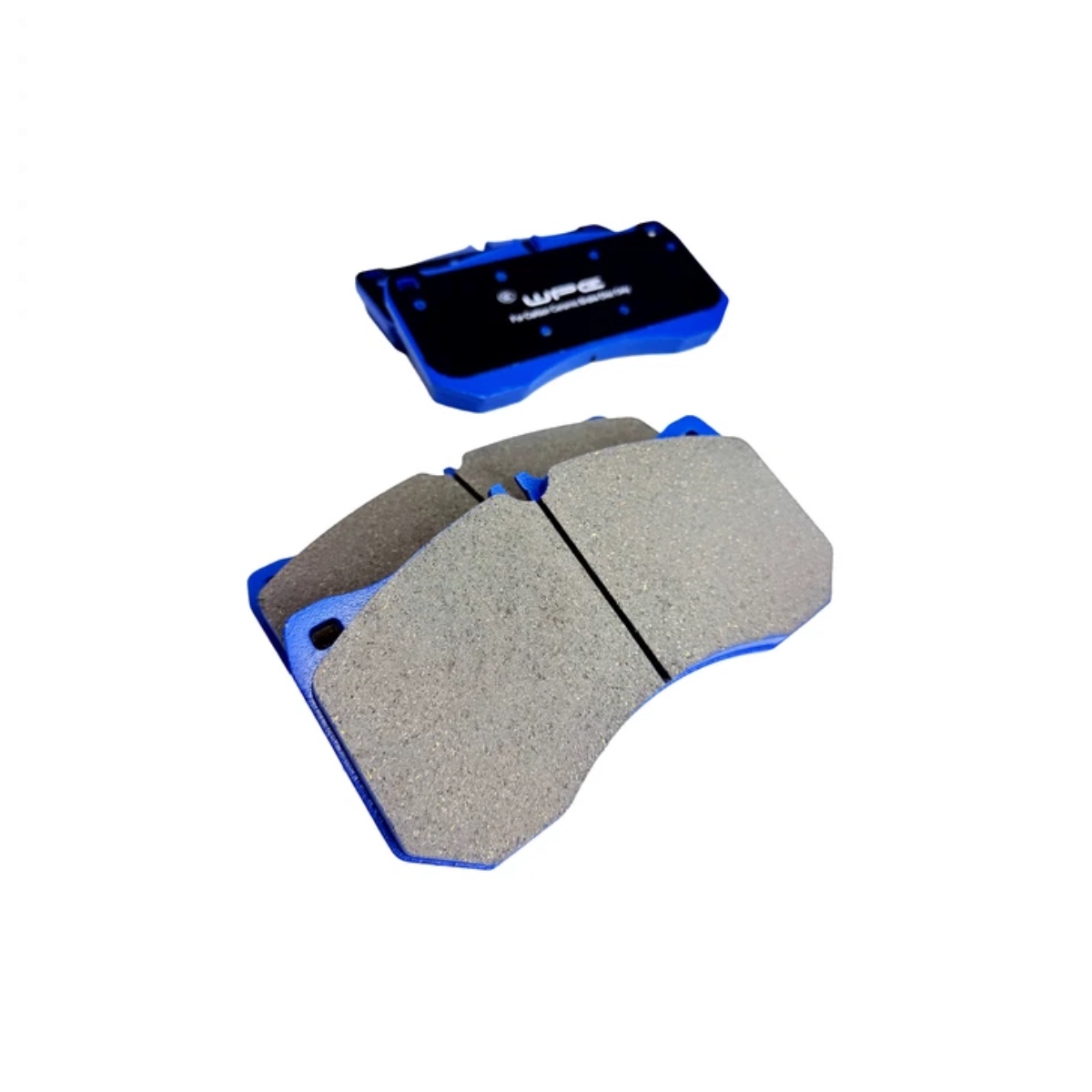
Carbon ceramic discs require specific pad compounds. Using a standard iron disc pad will damage a CCB disc. Every ECR Racing system includes the correct compound for the application.
Compound 01
Road
Optimised for cold bite and consistent performance across a wide temperature range. Minimal dust, low noise. Suited to road use and occasional spirited driving.
Operating range: 0°C – 500°C
Compound 02
Road / Track
Higher temperature tolerance with good cold bite. The best all-round compound for drivers who use the road occasionally on track days.
Operating range: 50°C – 750°C
Compound 03
Track
Maximum performance at sustained high temperatures. Requires warm-up before full performance is available. Not recommended for road use.
Operating range: 200°C – 1000°C
Vehicle Fitment
Applications
Direct-fit CCB systems for vehicles originally equipped with carbon ceramic brakes.
| Vehicle | Position | Disc Size | OEM Caliper | Part Ref |
|---|---|---|---|---|
| Porsche 911 GT3 (992) | Front | 410 × 36mm | Porsche PCCB 6-pot | ECR-CCB-P911GT-F410 |
| Porsche 911 GT3 (992) | Rear | 390 × 32mm | Porsche PCCB 4-pot | ECR-CCB-P911GT-R390 |
| Porsche Cayenne Turbo S | Front | 440 × 40mm | Porsche PCCB 10-pot | ECR-CCB-PCAY-F440 |
| Ferrari F8 Tributo | Front | 398 × 36mm | Brembo CCM 6-pot | ECR-CCB-FF8-F398 |
| Ferrari Roma | Front | 390 × 34mm | Brembo CCM 6-pot | ECR-CCB-FROMA-F390 |
| Lamborghini Huracán EVO | Front | 380 × 34mm | Brembo CCM 6-pot | ECR-CCB-LHEVO-F380 |
| BMW M3 Competition (G80) | Front | 395 × 36mm | Brembo CCM 6-pot | ECR-CCB-BM3G-F395 |
| BMW M5 Competition (F90) | Front | 400 × 38mm | Brembo CCM 6-pot | ECR-CCB-BM5F-F400 |
| Audi RS e-tron GT | Front | 415 × 40mm | Brembo CCM 10-pot | ECR-CCB-AETGT-F415 |
Part references for guidance only. Full fitment confirmation available on brake-systems.co.uk. Don't see your vehicle? Contact us.
Ready to order?
Full specifications, fitment confirmation and fast UK delivery on brake-systems.co.uk.